
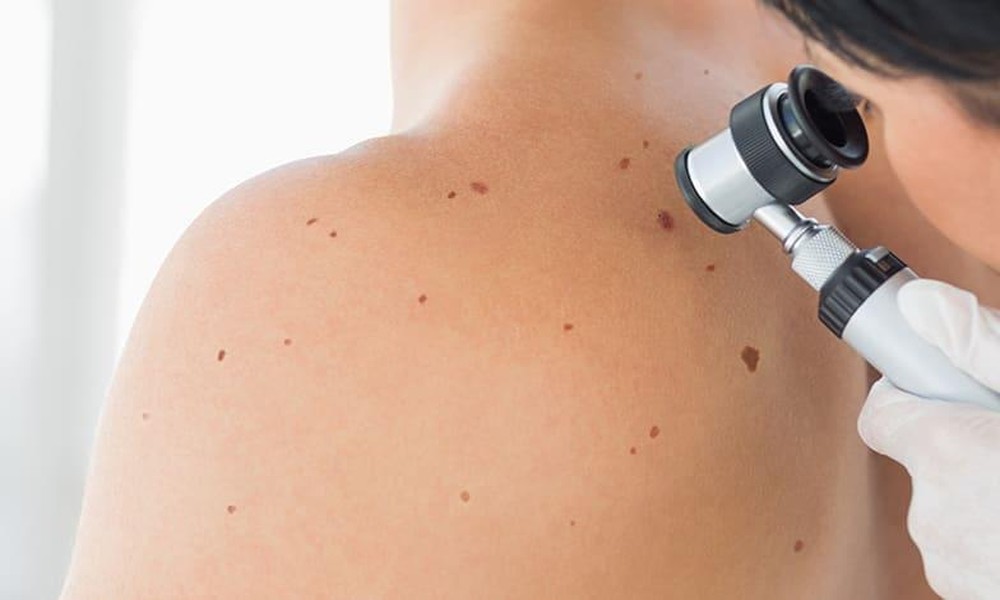
A skin cancer screening is usually straightforward, visual, and far less intimidating. The purpose is to examine the skin from head to toe for spots that look unusual, newly changed, or suspicious enough to deserve a closer look. Experts explain that full-body skin exams help detect skin cancer early and include areas people often miss, such as the scalp, behind the ears, under the arms, and between the toes.
Changes in Moles Get Immediate Attention
One of the first things dermatologists assess is whether a mole looks different from the rest. When patients schedule a skin cancer screening, doctors often use that visit to examine spots that have changed in shape, size, or color over time. Professionals notes that melanoma may arise from a common mole, a dysplastic nevus, or skin that once looked normal.
Dermatologists also rely on the ABCDE rule during visual assessment. They look for asymmetry, irregular borders, uneven color, larger diameter, and any sign that a lesion has changed from its earlier appearance. A mole that stands out from nearby spots may raise concern, even if it does not look dramatic at first glance.
Texture, Scale, and Slow Healing Spots Matter
A screening does not focus on moles alone. Dermatologists also look for rough patches, scaling, crusting, redness, sores that do not heal, or spots that bleed and return. Professionals advises patients to watch for lesions with flaking, roughness, bleeding, or non-healing changes throughout the year.
Features That Often Get a Second Look
- Moles with uneven shape or multiple colors
- Spots that bleed, scab, or keep returning
- Rough patches that stay despite basic care
- Lesions that itch, sting, or feel tender
- Areas that look different from nearby skin
They help dermatologists decide which areas deserve more attention during the screening and whether further testing makes sense.
Hidden Areas Receive a Full Check
A full body exam can cover the scalp, behind the ears, under the arms, between the toes, and other areas people often skip during self-checks. Skin cancer can develop almost anywhere on the body, including places that receive very little direct sun. That detail surprises many first-time patients.
This full check matters because people usually focus on the obvious places and overlook the hidden ones. A dermatologist may part the hair, inspect the soles of the feet, and look around the nails for subtle changes. Dermatology also recommends self-exams that include the back, neck, scalp, toes, and nails, which shows how easy these areas are to miss at home.
Personal Risk Factors Shape What Dermatologists Notice
Dermatologists do not approach every screening in exactly the same way. They also review risk factors such as personal history, family history, skin type, age, and long-term sun exposure when deciding what deserves extra caution. They state that annual exams are important for everyone and especially important for people with known risk factors.
This is also where patient symptoms matter. Someone may schedule a skin cancer screening because of an itchy mole, a rough patch, or a spot that has started to bleed or scab. Earlier assessment when a mole stays itchy, appears atypical, bleeds, scabs, or changes appearance. A dermatologist combines those details with the skin exam to decide the next step.
If a dermatologist finds a suspicious lesion, the next step may involve monitoring, biopsy, or a treatment plan based on the appearance and location of the spot. Dermatology presents screenings as part of a broader skin cancer detection and treatment process, which may continue when something abnormal appears.