
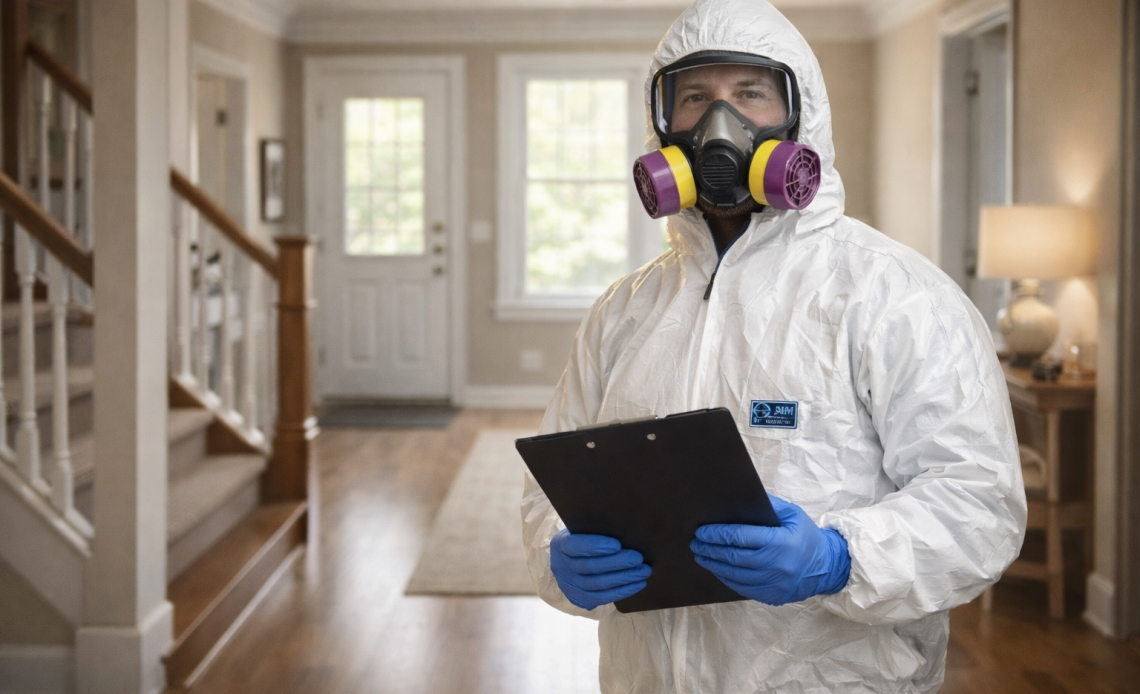
From Naperville to Aurora, families across DuPage and Kane County are navigating one of the most financially and emotionally complex situations imaginable with almost no preparation. Here is what they need to know.
Nobody prepares for the moment they have to call a biohazard cleanup company.
It happens after the police leave. After the coroner. After the neighbors stop asking questions, the house goes quiet in a way it never has before. Someone in the family — usually whoever holds themselves together longest — pulls out a phone and searches for help. And in that moment, with grief running at full volume and practical decisions demanding immediate attention, they are completely unprepared for what comes next.
This is the reality for thousands of Illinois families every year. Unattended deaths. Suicides. Violent crimes. Industrial accidents. Medical emergencies. The incidents vary, but the experience that follows is remarkably consistent: families are thrust into an unfamiliar industry, under extreme emotional duress, with no baseline knowledge of what professional biohazard remediation involves, what it should cost, what their insurance actually covers, or what state programs exist specifically to help them.
In the communities surrounding Naperville and Aurora — one of the most densely populated and economically active corridors in Illinois — this knowledge gap carries real financial consequences. Families overpay. They miss the insurance coverage they were entitled to. They miss state compensation programs with filing deadlines that pass before anyone tells them the program exists. And sometimes they make the catastrophic mistake of attempting to clean up themselves, creating health and legal liabilities that compound an already devastating situation.
This article exists to close that gap.
What Biohazard Cleanup Actually Is — And Why It Bears No Resemblance to Standard Cleaning
The term “biohazard cleanup” sounds clinical. The reality is far more complex than the name suggests, and understanding what the work actually involves is the foundation for every financial and practical decision that follows.
Professional biohazard remediation is a federally regulated activity. Technicians must be trained and certified under IICRC standards — specifically in crime and trauma scene cleanup, not just general restoration. They operate under OSHA’s Bloodborne Pathogens Standard (29 CFR 1910.1030), which governs how biological materials, including blood, bodily fluids, and tissue, are handled, contained, and disposed of. The materials removed from a property cannot go into a standard dumpster. They are classified as regulated medical waste and must be transported by licensed haulers to licensed disposal facilities, with a complete chain of custody document tracking every step.
In Illinois, the scope of a single job can range from a contained remediation of a single room following a medical emergency to a full structural intervention involving subfloor removal, drywall teardown, HVAC decontamination, and molecular-level odor elimination across an entire property. The variables that determine scope — and therefore cost — include the type of incident, the size of the affected area, how long the biological material was present before discovery, the type of building materials involved, and whether HVAC systems distributed contamination beyond the immediate scene.
That last factor is one of the most commonly overlooked. In Illinois homes with forced-air heating and cooling systems — which is most of them — a biohazard event in one room can result in biological aerosols being pulled through return vents and distributed throughout the entire structure within hours. A cleanup crew that addresses only the visible scene without evaluating the HVAC system is not doing the job completely. The family will know within weeks, when odors return from rooms that appeared untouched.
This is not a service that can be evaluated on price alone. The cheapest company that responds to a search for biohazard cleanup near me is rarely the right company. Understanding the standards that separate legitimate professional remediation from inadequate work is the only protection families have in a market they have no prior experience navigating.
The Cost Reality — And Why Illinois Families Are Often Surprised
Cost is the question families ask first and the one they are least equipped to evaluate. The Illinois biohazard cleanup market is not price-regulated, and the range between what different companies charge for comparable work is significant.
A detailed breakdown of what professional crime scene and biohazard cleanup costs across Illinois — including the specific factors that drive costs higher, what a reasonable range looks like for different incident types, and how to evaluate whether a quote is legitimate — is available in this comprehensive Illinois crime scene cleanup pricing resource. Reading it before making any hiring decision puts families in a position to ask the right questions rather than simply accepting whatever number is presented.
What families in the Naperville and Aurora area consistently encounter is that the final cost is determined by scope, and scope is only accurately determined by an on-site assessment. Any company that quotes a firm price over the phone before seeing the scene is either guessing or has no intention of honoring that number. Reputable companies provide free on-site assessments with a full explanation of required work before any agreement is signed. That assessment is the only legitimate basis for a price.
The other financial reality that surprises families is how quickly costs escalate when the discovery of an incident is delayed. In a state with Illinois winters and summers — both extremes — biological decomposition is dramatically accelerated or complicated by temperature. A property in an Aurora subdivision in July, where an unattended death went undiscovered for a week, presents a remediation challenge orders of magnitude more complex than the same incident discovered within hours. Every day matters. That is not a sales tactic — it is the biological reality of what happens to organic matter in residential environments.
Illinois Homeowners Insurance — What Families in Naperville and Aurora Are Leaving on the Table
Here is what the biohazard cleanup industry knows and most Illinois homeowners do not: a significant portion of trauma scene and crime scene cleanup costs are covered under standard Illinois homeowners’ insurance policies. And families lose that coverage constantly — not because it doesn’t apply to them, but because they don’t know it exists, they report claims incorrectly, or they miss the reporting window entirely.
The coverage landscape in Illinois is genuinely complex. Different policy types — HO-3 owner-occupied, HO-4 renter’s, HO-6 condo, dwelling policies for landlords — trigger different provisions for different incident types. A Naperville homeowner dealing with the aftermath of a suicide faces a different claims process than an Aurora landlord whose tenant died of natural causes in a rental unit. The specific policy language matters. The carrier matters. The incident classification matters.
What does not change across any of these scenarios is this: the clock starts the moment the incident is discovered. Illinois insurers impose reporting windows — typically 60 to 90 days — and missing them provides grounds for claim denial regardless of whether the underlying loss is covered. Families who spend weeks in grief before thinking about insurance are the ones who lose coverage they were entitled to.
A thorough breakdown of exactly how Illinois homeowners’ insurance applies to crime scene and biohazard cleanup situations — including which policy provisions to reference, how to report correctly, what documentation insurers require, and how to work with a remediation company that handles adjuster coordination — is laid out in full detail here: Does Homeowners Insurance Cover Crime Scene Cleanup in Illinois.
The single most important action any Illinois family can take in the immediate aftermath of a biohazard incident is to call their insurance company before cleanup begins. Not after. Not until the scope is determined. Before. That call establishes the claim timeline, protects the coverage window, and positions the family to have a professional remediation company work directly with the adjuster, which the best companies do as a standard part of their service.
The Program Most Illinois Families Never Find in Time
For families whose biohazard situation is the direct result of a violent crime, there is a financial resource that the state of Illinois makes available specifically to cover costs like cleanup and remediation. The Illinois Crime Victim Compensation program is administered through the Illinois Attorney General’s office and exists to reduce the financial burden on victims and their families in the aftermath of violent crime.
Most families who qualify for this program never file. Some find out about it after the fact — after they’ve paid out of pocket, after the deadline has passed, after a situation that could have been partially or fully covered by the state became a financial burden added on top of an emotional one.
The program has eligibility requirements, documentation standards, and filing deadlines that make early action essential. The full details of how the program works, who qualifies, what expenses are covered, and how to navigate the application process are covered comprehensively here: Illinois Crime Victim Compensation for Crime Scene Cleanup.
For families in Aurora, Naperville, or anywhere across the Illinois corridor, the message is simple: if the incident involved a violent crime, ask about this program immediately. The application window is not indefinite, and the documentation required is most easily gathered in the immediate aftermath of the incident, while records are fresh and law enforcement involvement is recent.
What Choosing the Right Company in DuPage and Kane County Actually Looks Like
The Naperville and Aurora corridor sits at the center of Illinois’ most densely populated suburban region. DuPage County is one of the wealthiest counties in the Midwest. Kane County is home to more than 500,000 residents across a mix of urban, suburban, and rural communities. The biohazard incidents that occur here span every demographic — luxury estate properties in Naperville’s west side, apartment complexes along the Aurora commercial corridors, older single-family homes in established neighborhoods, and commercial properties throughout both counties.
ACT Cleaners has served this corridor for over 25 years. The company is veteran-owned and operated — a background that shapes how every job is approached. Veterans show up when called. They do the job completely. They don’t look for shortcuts when no one is watching, and they treat the people they serve with the respect that a moment of genuine crisis demands.
Naperville biohazard and crime scene cleanup through ACT Cleaners covers the full DuPage County footprint, including Lisle, Downers Grove, Wheaton, Westmont, and surrounding communities. Every technician holds an active IICRC certification specific to crime and trauma scene cleanup. Every job operates under full OSHA bloodborne pathogen compliance. Every job concludes with ATP verification testing — molecular-level confirmation that the property is biologically safe for re-occupancy — and complete documentation for insurance, OSHA, and regulatory purposes.
Aurora crime scene and biohazard cleanup services extend across the full Kane County service area, including Oswego, Montgomery, Sugar Grove, North Aurora, Batavia, and St. Charles. ACT Cleaners works directly with insurance adjusters, handles all claim documentation, and coordinates with law enforcement agencies across both counties as standard practice. The company carries an A+ BBB rating earned over decades of consistent performance in exactly these kinds of high-stakes, high-sensitivity situations.
Response is available 24 hours a day, every day of the year. No voicemail. No answering service. A live team member answers every call and begins coordination immediately. Jobs are typically scheduled within 15 minutes of first contact, and crews arrive within one to two hours of official scene release by law enforcement.
A Practical Framework for Illinois Families Facing This Situation Right Now
If you are reading this because something has already happened, here is the sequence that protects your family, your property, and your financial interests:
Secure the scene immediately. Do not enter the affected area. Bloodborne pathogens, including Hepatitis B, Hepatitis C, and HIV, survive in dried biological material for days. If HVAC is running, turn it off to prevent aerosol distribution through the system.
Contact law enforcement if you haven’t already. Unattended deaths require coroner involvement. Violent crimes require police documentation. Professional remediation cannot begin until the scene is officially released — and that documentation is also what you will need for insurance and any crime victim compensation claim.
Call your insurance company before cleanup starts. Establish the claim, get a reference number, and confirm your reporting is on record. This single step protects coverage that families lose constantly through delayed reporting.
Get a free assessment from a certified company before agreeing to anything. Scope and cost can only be determined on-site. Any company that won’t provide a free assessment before starting work is not the right company.
Ask directly about crime victim compensation if the incident involved violence. Your remediation company should know this program exists and be able to point you toward it. If they have never heard of it, that tells you something about their experience serving Illinois families.
Verify every credential before signing. IICRC certification, OSHA bloodborne pathogen compliance, licensed medical waste disposal, and full liability insurance. Ask for confirmation of all of it. A company that hesitates on any of these questions is not qualified to be in your home.
The moment after tragedy is the worst possible time to be making unfamiliar decisions under financial pressure with no preparation. The information in this article, and the resources linked throughout it, exist so that Illinois families in the Naperville and Aurora corridor — and across the state — can face that moment with at least one less thing they didn’t know.
ACT Cleaners is available 24 hours a day at (888) 477-0015.
ACT Cleaners provides professional biohazard cleanup near and far, crime scene cleanup, unattended death cleanup, suicide cleanup, and trauma scene remediation throughout Illinois including Naperville, Aurora, Chicago, Rockford, Joliet, Elgin, Schaumburg, Oswego, Bolingbrook, Downers Grove, Wheaton, DeKalb, Gurnee, Batavia, St. Charles, and communities across DuPage, Kane, Cook, Will, Kendall, and McHenry Counties. Call (888) 477-0015 for immediate 24/7 response.