
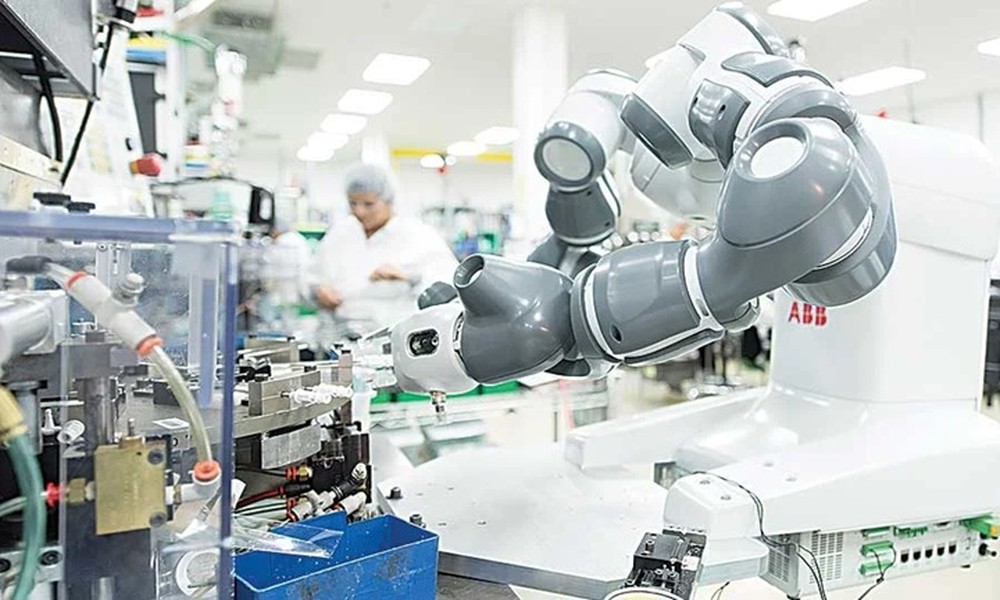
Inside the cleanrooms where modern medical manufacturing takes shape, the margin for error is measured in microns, and every particle drifting through the air is counted. A pacemaker housing that varies by a fraction of a millimetre, a surgical blade with a burr too small to see without magnification, a catheter whose inner lumen narrows in one spot: any of these can alter a patient’s outcome. The people who build these devices know this, and it shapes how they work. What follows is an account of how the sector has organised itself around that burden, and what separates serviceable production from the kind that genuinely protects the patient at the end of the supply chain.
The Weight of the Regulatory Framework
Medical devices occupy a category apart from ordinary industrial goods. A screw used in a vehicle bracket can be produced to a tolerance band; a screw used in a spinal implant must be traceable from ore to the theatre where it was placed.
Medical device manufacturing operates under overlapping regulatory systems:
- ISO 13485 governs the quality management system for medical device producers, covering design control, risk management, and post-market surveillance.
- FDA 21 CFR Part 820 applies to any device sold into the United States, regardless of where it was made.
- EU MDR 2017/745 has reshaped European market access, demanding deeper clinical evidence and tighter supplier oversight.
- ISO 14971 formalises how risk is analysed across the product life cycle.
These frameworks do not merely guide production. They define it. A process that cannot be documented, audited, and reproduced is not, in regulatory terms, a process at all.
Where Singapore Fits
Singapore has spent three decades assembling a medical manufacturing base that is now among the most concentrated in the world. A significant share of the globe’s contact lenses, insulin delivery devices, and surgical instruments passes through its cleanrooms. The reasons are material as well as political: stable governance, skilled technical labour, robust intellectual property enforcement, and a precision engineering ecosystem that grew up alongside the semiconductor industry.
The result is a medical device production environment where tolerances of two microns on injection moulded components are routine, and where contract manufacturers frequently hold dual certification to ISO 13485 and ISO 9001, with automotive grade IATF 16949 available when devices cross into combination product territory.
Core Processes in Device Production
The methods used to build medical devices are under constant refinement. Among the most consequential:
Metal Injection Moulding
Metal injection moulding has become a mainstay for small, geometrically complex components such as orthodontic brackets, endoscopic jaws, and implantable fasteners. The process combines fine metal powder with a polymer binder, injects the mixture into a mould, then removes the binder and sinters the result into a dense metal part. Yields approach those of conventional moulding, while material properties rival wrought stainless steel.
Ceramic Injection Moulding
For applications requiring biocompatibility at extreme hardness, such as dental restorations and certain joint components, ceramic injection moulding produces parts from zirconia and alumina powders with surface finishes that reduce the need for secondary grinding.
Cleanroom Plastic Injection Moulding
Disposable syringes, diagnostic cartridges, and drug delivery components are typically produced inside ISO Class 7 or Class 8 cleanrooms. Particulate contamination, not dimensional variation, is the dominant concern. Air change rates, gowning protocols, and resin handling all fall under the quality system.
Additive Manufacturing
Laser powder bed fusion and electron beam melting are now used for patient specific implants, particularly in maxillofacial and orthopaedic reconstruction. Certification pathways remain more demanding than for traditional methods, but the clinical case for customised geometry continues to strengthen.
Evaluating a Manufacturing Partner
For a device developer choosing where to place production, the visible specifications are only part of the picture. What tends to matter more is the depth of the supplier’s quality system. Points worth examining:
- Evidence of sustained ISO 13485 certification, including recent audit findings
- Validated cleanroom environments with documented particle counts
- Design history files and device master records maintained in version controlled systems
- Supplier controls extending to raw material lot traceability
- Process validation data, including IQ, OQ, and PQ protocols
- Sterilisation arrangements, whether ethylene oxide, gamma, or e-beam
A facility that can produce clean parts cheaply is not, by itself, a medical manufacturing partner. A facility that can reproduce those parts across five years, through staff turnover, raw material lot variation, and regulatory audit, is.
The Shape of What Is Coming
Two forces are reshaping the sector. The first is the steady integration of electronics, software, and mechanical hardware in single devices, which means combination product manufacturing is now a discipline of its own. A continuous glucose monitor combines a sensor, a polymer housing, adhesive chemistry, and a wireless radio, each with its own supply chain and its own failure mode. The second is the uneven adoption of automation and data capture across production lines, producing traceability records that a decade ago would have been impossible to assemble.
What This Means in Practice
The device companies that thrive in the next decade will not be the ones with the cheapest unit cost. They will be the ones whose manufacturing partners can show, line by line and batch by batch, exactly what happened to a component from the moment its raw material arrived to the moment it left the facility.
For anyone building devices that will be implanted in a body, attached to a patient in critical care, or relied upon for diagnosis, the choice of partner will shape both clinical outcomes and commercial survival, which is why investing the time to understand the full landscape of medical manufacturing remains one of the most consequential decisions a device company will make.